
What does it mean to work on purpose?
A quick overview.
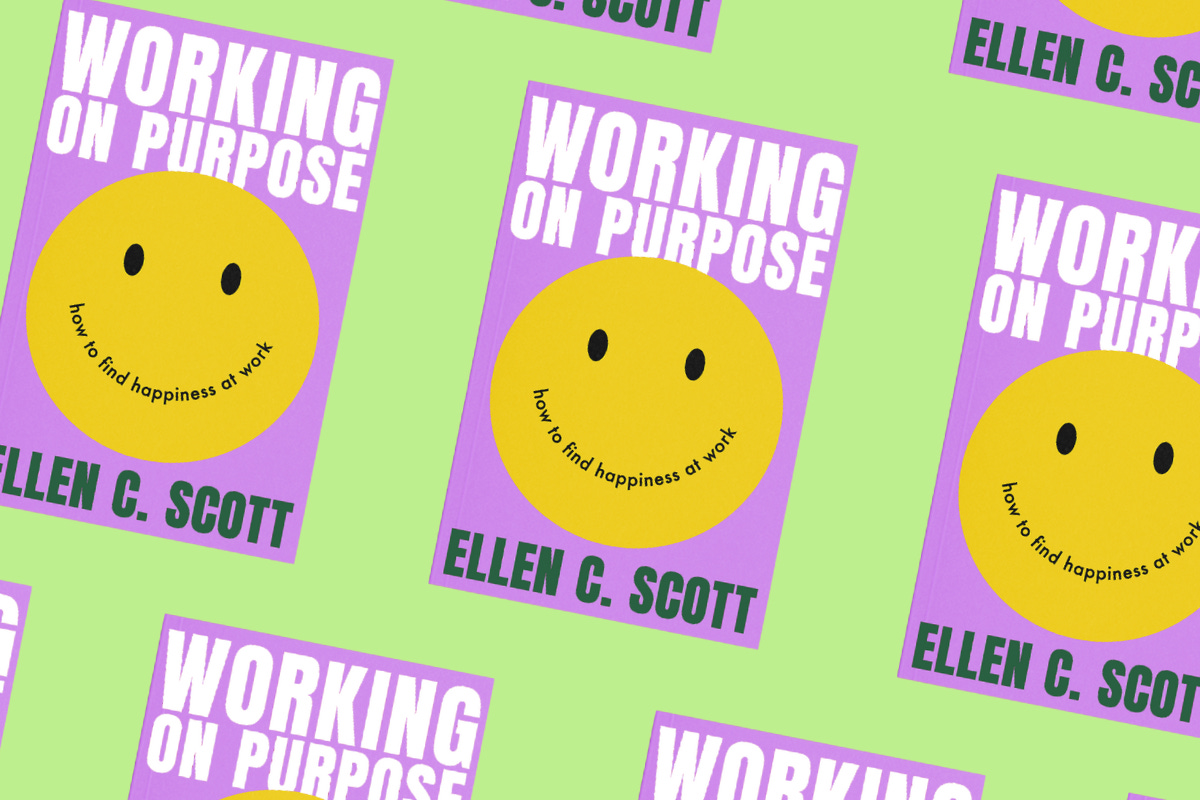
It’s been a big week in Working On Purpose world.
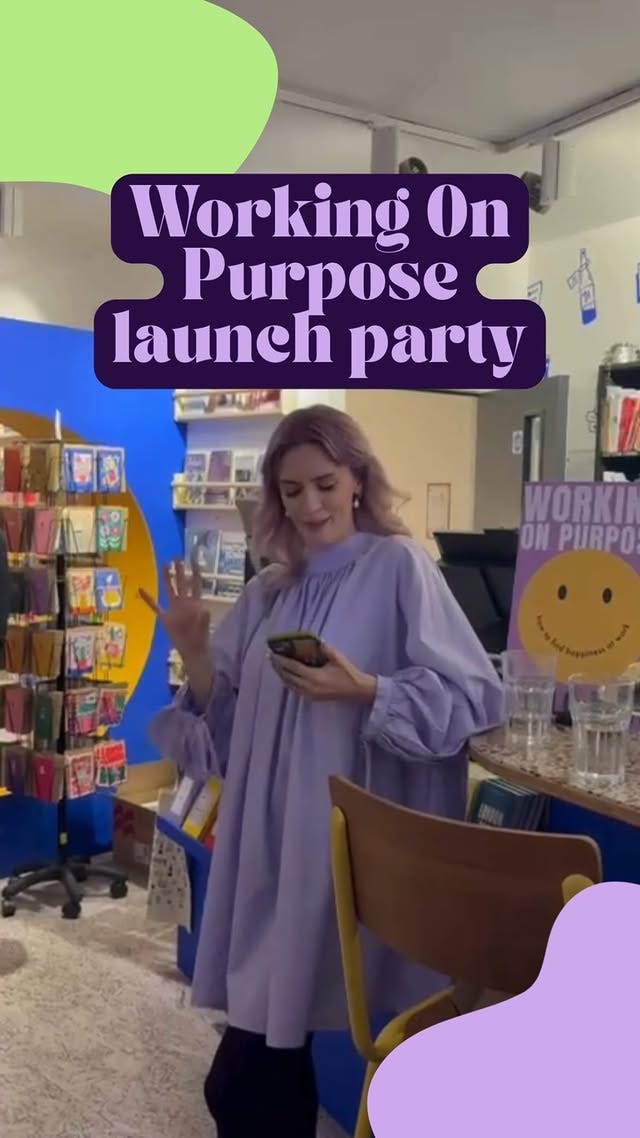
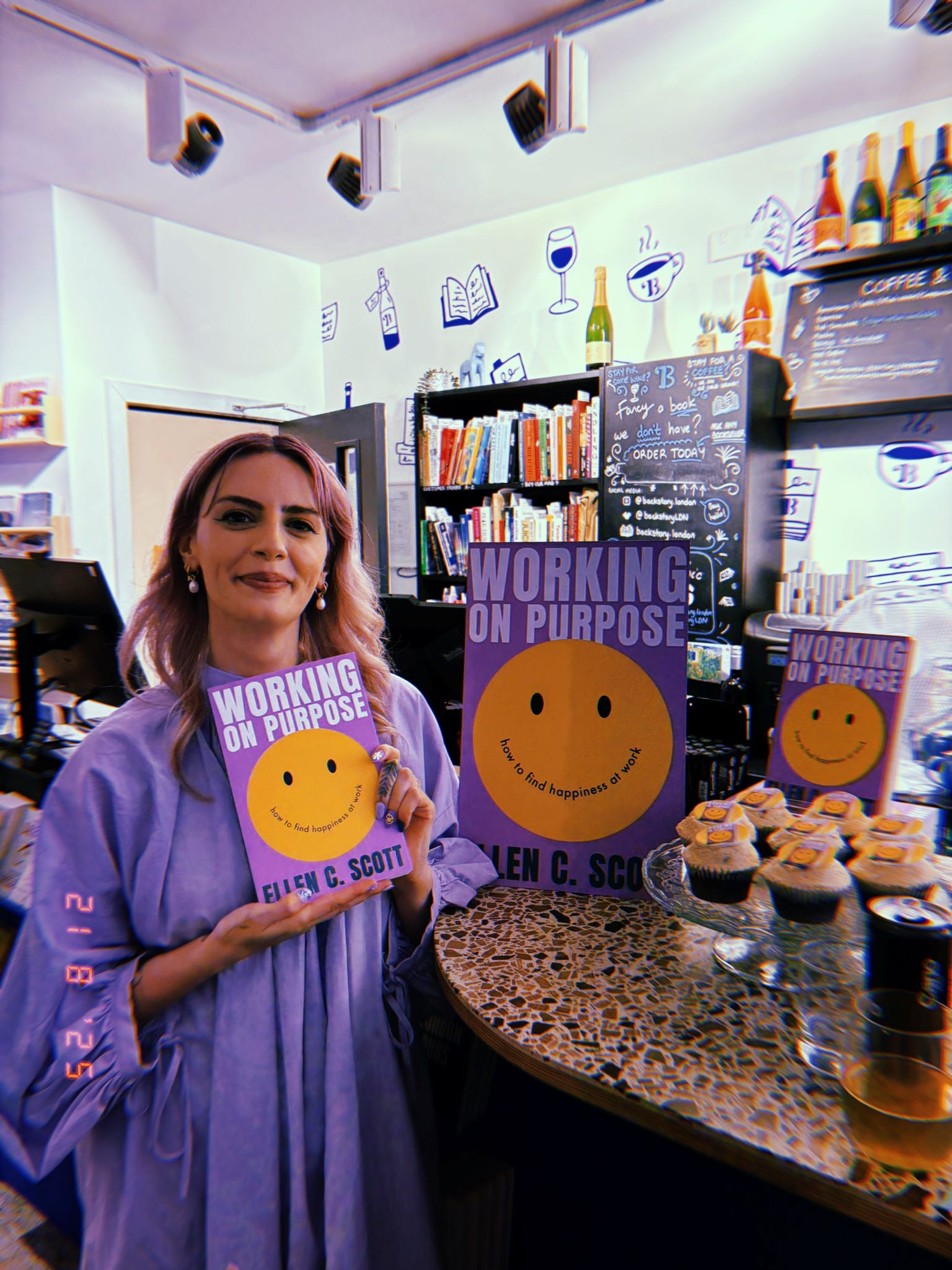
On the 21st of August, it was the official release day for Working On Purpose, my first ever book. And on the evening of the 20th of August I had a launch party at Backstory in Balham.
I kind of assume that anyone subscribed to the Working On Purpose newsletter is already aware of Working On Purpose the book, but we all know what happens when you assume1 so this week’s newsletter is a bit of an introduction to the book, what it’s about, and how it came to be.
First off, who am I? I’m Ellen C Scott, the woman behind this newsletter who is currently typing these words you’re reading. I’m a journalist. I used to work at Metro (for around seven and a half years) as the lifestyle and weekend editor and now my main job is digital editor at Stylist magazine. Alongside my 9-5 I like to write non-Stylist stuff, such as this newsletter, the Working On Purpose book, and fiction (ooooooh). I also do stuff other than writing, such as occasional woodwork, hanging out at the home I share with my partner and our two cats, reading, riding my bike around town, that kind of thing.
I ‘got into’ writing and talking about work by accident but also by necessity. I’d dabbled in career-related writing at Metro, but it wasn’t until the ‘quiet quitting’ trend hit that I started to specialise in it. I (obviously) didn’t come up with quiet quitting, but because I was the first person to pick up on the trend and write about it for a news website, I got a lot of traction talking about it. This was back in the day when news sites could still get traffic from Twitter. Metro did a ‘Moment’ on Twitter of the quiet quitting article, it got picked up by the algorithm and became a ‘featured Moment’, and then millions of people saw it. I then got called a bootlicker and told I suuuuck a lot because in the article I suggested that quiet quitting might not be a great idea, and also because people misunderstood and thought *I* was calling just doing your job a type of ‘quitting’2.
The reason I even picked up on the quiet quitting trend was because I’d been going through a bit of my own moment of work-related reevaluation. During the Covid pandemic I had a career-themed crashout and considered quitting everything and running away to the forest. I realised that I had spent the last decade of my life working in a deeply unhealthy, unfulfilling way. I was a burnt out work addict who for too long had tried to fill a big gaping emotional hole with any measure of success I could get my hands on. I’d tied my self-worth so completely to my work that my mood ran in a parallel line against the Metro lifestyle section’s daily traffic. I’d worked late and at the weekends in an attempt to get ahead, sure, but also as a way to avoid the terrifying prospect of confronting who I was outside of my job.
I’d always loved the work I did and felt it had a bigger purpose to it. I loved that I could connect with people through my writing and make them feel less weird and alone. But the way I was working pre-2020 wasn’t in service of that purpose. I’d fallen into the trap of valuing traffic targets above all else; of using work as a distraction tactic; of running in a hamster wheel fast enough that I didn’t have time to question my direction.
Quiet quitting appeared in the midst of this revelatory period. But for me, it wasn’t the solution. I didn’t want to just stop caring entirely. I didn’t want to accept that all work sucks and that the best we could hope for was to just do the bare minimum. Like so many other people from my generation, I was deeply disillusioned with the girlboss, hustle culture dream I’d been sold, but I didn’t think just giving up was the right way forward.
So I came up with my own solution, which – I’m trying not to race ahead here – later became working on purpose. I started to explore the world of work more in my writing at my day job (mostly for selfish reasons), while also asking myself some big work-related questions off-the-clock. I applied for a role at Stylist because I wanted to work in a way that realigned with my sense of purpose, and was fortunate enough to land it. Leaving Metro meant a pay cut, but I knew this was a worthwhile sacrifice to create a career path that actually made me content.
Over the last five years I’ve been working in a different, healthier way, that centres around regular check-ins with myself about what I want to get out of the work that I do. While doing this, I kept talking to other people in other industries about their frustrations and disappointments with work, and started to wonder if my work reevaluation and change of approach could perhaps be helpful for other people to adopt, too.
Bruce Daisley had got in touch with me when the quiet quitting article came out to invite me on his podcast to chat. At the time I said no thanks, because I was getting a lot of heat online. When he reached out again months later, I was in a very different place and said sure, why not. On the podcast, I mentioned that as part of my new approach to work, I was putting myself out there on the fiction front, and that if any agents were listening I’d love for them to get in touch.
It turns out many agents were listening, and a few of them did indeed get in touch. After some meetings and chats and sending over drafts, I signed with The Soho Agency and was very excited to get cracking on a novel while also working hard at my fancy Stylist job. It was my agent that suggested that I should consider writing a non-fiction book about work, first; an idea that blew my mind because my thought up until that point was ‘who on earth am I to tell people how to work?’. The conversations I’d been having and the work I’d been doing made me realise that my agents might be on to something – people were in real need of a new way of looking at the world of work, and the journey I’d been on could serve as a handy route forward.
I started the Working On Purpose newsletter. I co-hosted Bruce Daisley’s podcast for a while. I dived deeper into the world of work in my writing, reading, research, etc. I wrote a 10,000 word proposal for Working On Purpose the book along with some sample chapters. My agents sent the proposal to publishers. A few of them were keen. I said yes to Piatkus at Little, Brown, and in June 2024 I was officially given the go-ahead to write Working On Purpose the book. I interviewed hundreds of case studies and experts, wrote like mad in the evenings and at the weekends while putting in the hours at my actual full-time job, and filed my first draft in November of that year (I was so glad I did that proposal, which served as an extremely helpful plan for what the book should actually be).
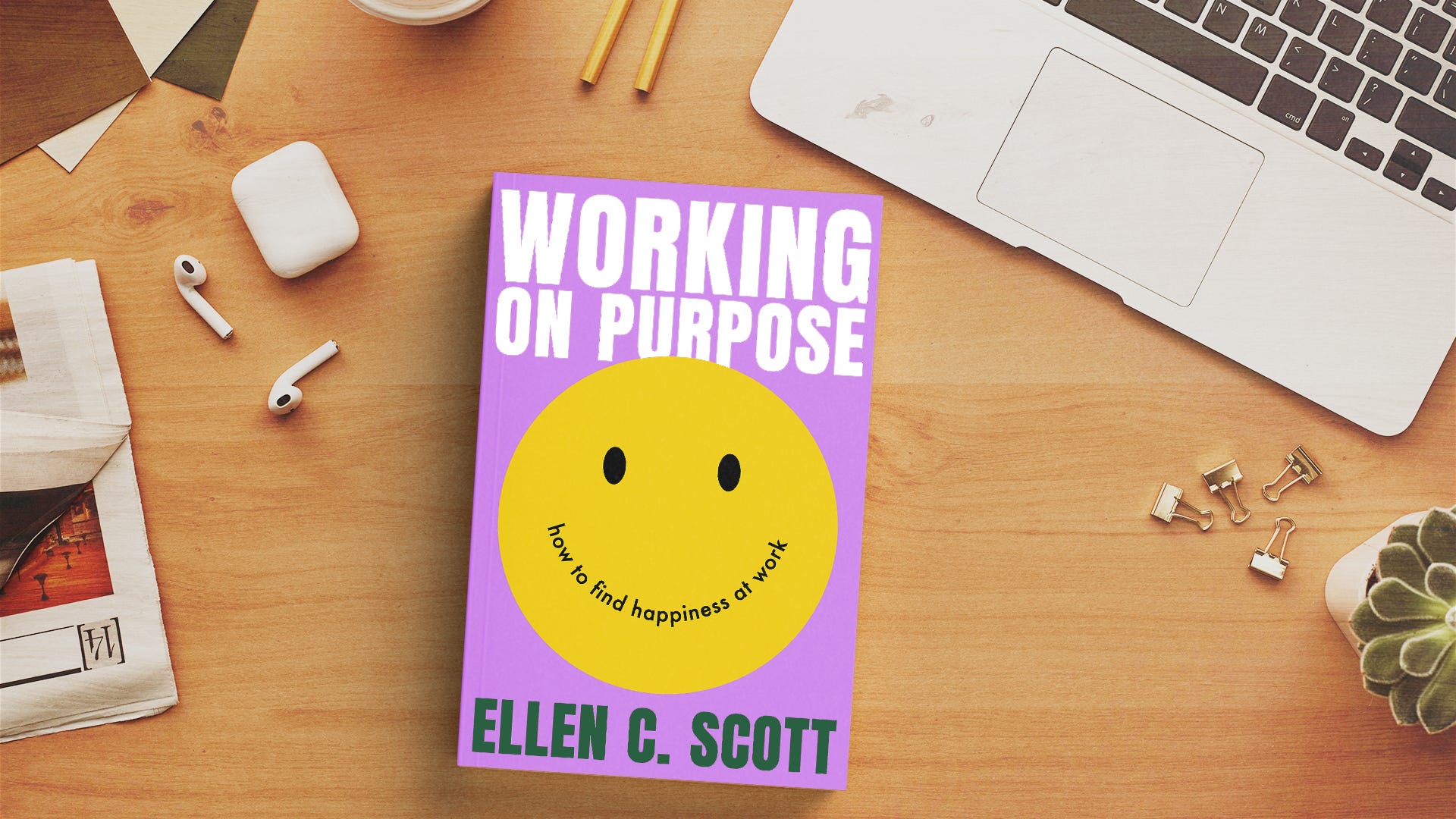
Then it was time for edits and rewrites and legal checks and cover design confirming and marketing and all that fun stuff, and finally, finally, in August 2025, everyone can get their hands on the end result of all of this slog: the ultimate guide to working in a happier, healthier way, that is neither endless hustling or quiet quitting, Working On Purpose by Ellen C Scott.
Working on purpose means getting honest about work. It’s about asking yourself what work really means to you and what truly matters. It’s calling for much-needed change in working practices. It’s doing your bit to make the world of work better. Working on purpose is understanding what gives your life a sense of meaning and purpose (and that might not be work!) and tweaking and tailoring your working hours to better allow for more of that. It’s refusing to mindlessly plod through life or keep running on that hamster wheel and instead asking for more.
Inside Working On Purpose the book you’ll find…
An explanation of how work got so broken
A guide to figuring out whether you’re a searcher, a striver, or a stabiliser (very important and central to working on purpose)
Help assessing what actually matters to you
Advice on how to align your life and your work with your sense of meaning and purpose
Science-backed hacks for workplace happiness
Calls for change from the top
Answers to the question: ‘should I ditch the 9-5 and start my own business?’
Real stories of different people’s experiences of and feelings about work
Expertise on why work matters
Guidance on how to find the sweet spot of caring about your job so you don’t experience burnout or boreout
A handbook for managing workers of different generations
A glossary of all the work trends and if you should do them
A vision for the future of work
AND MORE.
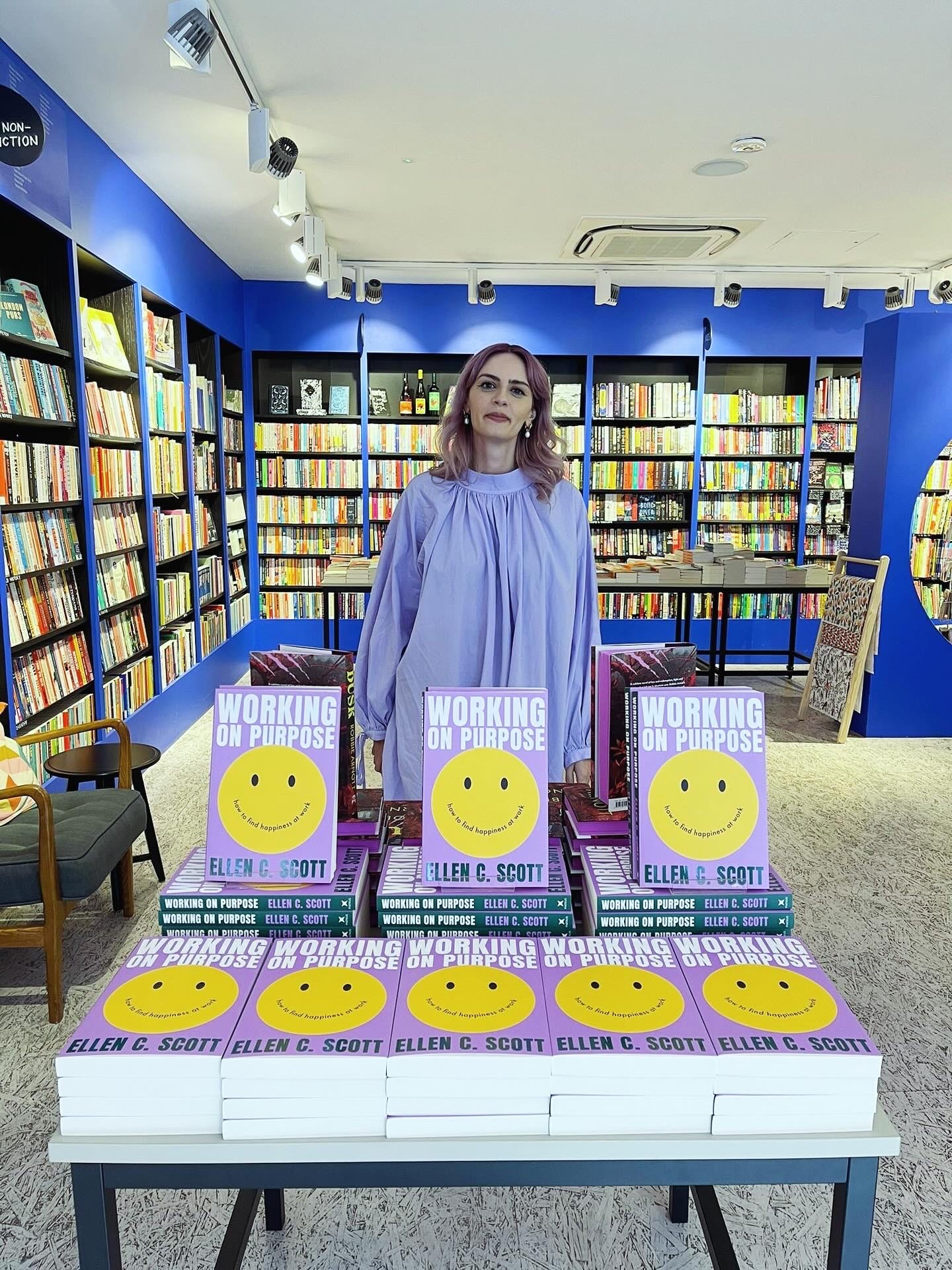
I really, truly believe that everyone can benefit from working on purpose, and that the way to start working on purpose is, of course, to read Working On Purpose the book.
Here’s the link to buy it. If you get a copy, please do let me know what you think and send me pics. Also send me notes on how you get on while reading it! I would love to hear from anyone who has changed their working life in any way as a result of my book. Oh and also tell a friend/enemy/colleague about Working On Purpose, too. Let’s spread the word and make work loads better.
Here’s the speech I gave at the book launch, which sums it all up, really:
I’d like to say a huge thank you to everyone here for coming out and showing your support. I’ve had recurring nightmares where no one shows up, so it’s hugely appreciated. I’d also like to give some special thanks to a few people:
To everyone who spoke to me about work, whether you became an official case study or contributed to the survey or helped me work out my thoughts. It is hugely appreciated and this book wouldn’t exist without you.
To all the experts who contributed their wisdom that you can now find in these pages.
To my agents at the Soho agency; Rowan Lawton and Eleanor Lawlor, who have been so supportive and were the first people to suggest I could write a book about work, something I never dared to think I had the right to do.
To everyone at Piatkus and Little, Brown but especially to my editor Bernadette and the publicity manager Gabriella, for taking a chance on me and shaping Working On Purpose into a proper actual book.
To everyone at Stylist for being wonderful to work with and a shining example of what a brilliant workplace can look like.
To friends and family who are here, and previous colleagues, who have all played such a vital role in enabling me to fulfil a dream.
And, as always, to Chris, Babka, and Panettone Soprano for filling my life with joy and meaning and purpose.
The beginning of the idea for Working On Purpose came from noticing just how negative the culture around work has become. Like so many people, I’m worn out by the hustle culture, girl boss mentality, but I don’t feel the other extreme, of quiet quitting and accepting that all jobs suck, either.
I know firsthand that work can be something brilliant. That it can deliver meaning and enjoyment and fulfilment. I think that a lot needs to change about work, obviously. But that dismissing all work as awful gives bosses and organisations a bit of a free pass, and leaves us all miserable.
I wanted to create the ultimate guide book to working in a happier, healthier way, with meaning and purpose at the forefront. To be clear, that doesn’t mean you have to force your job to be your passion or your reason to be alive. Instead, I’m encouraging you to get honest about and reconnect with what makes you feel complete, and tweak your approach to work to allow for more of that.
Whether it’s by leaning out, prioritising flexibility, giving yourself permission to put money above all else, understanding your gen z colleagues better, pushing for societal change, quitting your job and going it alone or taking on science-backed hacks for happiness, I hope that in this book you’ll find a guide to the right path for you.
I truly believe that we can all work in a better way, and that the way forward is working on purpose.
You make an ass out of u and me. I have to add this footnote because I said this to someone the other day and they didn’t know what I was on about.
Again, I didn’t create quiet quitting. I just wrote about it. You can read further thoughts on quiet quitting in my book, Working On Purpose.
Literally reading this just now-it's part of my drafted blog post-yay :-) great read!