

Rigidity rot is why your organisation will fail
The underdiscussed issue plaguing modern workplaces.

The world of work has a big problem. It’s a deep-rooted issue, setting in and fermenting across all sorts of businesses and industries. It’s not a new phenomenon, but it’s spreading and festering to the point that we have to address it. I’m calling it rigidity rot1.
Rigidity rot is a complete lack of flexibility, a stubborn resistance to change. It’s a reluctance to do things in any way other than the way they’ve always been done. It’s bafflement when people are unable or unwilling to do what bosses did ‘back in my day’.
And it’s destroying companies from the inside. Rigidity rot puts a stop to any chance of innovation and creativity. It also makes workplaces shed brilliant staff who get fed up of the restrictions. Growth is off the cards, but often so is the baseline level of success – when rigidity rot takes hold, businesses will stick to paths that evidently aren’t working, unknowingly marching right towards their demise. Because while comfort isn’t all bad, and constant change without ever giving things a proper shot at success is not good, stagnation is terrible.
Maybe you’re a boss reading this and thinking: nah, there’s no rigidity rot at my company. Or you’re working somewhere, reading this and thinking: oh that’s what I’m feeling.
Let me run through some of the manifestations of rigidity rot I’ve seen or heard about.
A blanket refusal to allow a change in working hours
Enforcing return to office orders
Hiring the same kind of people over and over again. For example, from the same previous workplaces, of the same class, of the same age range, from the same location, with the same experience, with the same thoughts…
And pushing out people who ‘cause trouble’ or are ‘disruptive’ because they ask questions
Micromanaging of how the work is done and results are achieved
Maintaining legacy hierarchies and stiff definitions of what each title ‘means’
Refusing to entertain different ways of working, such as asynchronous communication, reasonable adjustments for neurodiversity (eg banning wearing headphones while working), and new systems for organisation
Confusion/frustration when workers aren’t willing or able to do what workers were doing previously (ignoring the fact that so much has changed!)
A distrust or dislike of younger workers, often showing up in the form of telling them they don’t ‘know their place’, that they’re ‘too ambitious’, or that they’re disrespectful of authority
A belief that people who are new to the company should sit back and observe
Holding on to strategies and methods that worked previously and bristling at any suggestion of trying a different approach
Suggesting that certain workers’ previous successes, experience, or seniority mean they should never be questioned or challenged
Generally seeing questions and suggestions as dangerous things rather than opportunities
I could go on (and on). I think rigidity rot is the root cause of so much intergenerational discord – people hate Gen Z workers and think they’re lazy because they don’t want to work in the way we always have… instead of listening to them and wondering if maybe a different approach could be better for everyone – and that it is bizarrely prevalent in the UK in contexts beyond just work. There’s a real sense in Britain that the old way of doing things is automatically better, that change is always terrible, and that people who do things differently need to pipe down and know their place. You can see it all over the place; in our press, in our political climate, in the enduring nostalgia for the ‘good old days’. Culturally, I wouldn’t say the UK encourages innovation or straying from the status quo. I thought of this when Nicola Coughlan said on the first episode of SNL UK last weekend, "British people tend to root for the failure of others”. So true! I was amazed that SNL UK made it to launch – although there was, of course, huge amounts of snark from the British public before the first episode aired – but it’s also interesting that even this daring step forward is an iteration of a familiar franchise, rather than, say, creating a space for sketch comedy that’s entirely different to the structure of Saturday Night Live.2
There’s an everlasting cultural sense – one I struggle to understand – of: ‘I went through this thing, it was shit, and you have to do the same’. I don’t get it. I don’t think I ever will. My view tends to be more like: ‘I went through this thing, it was shit, and I don’t want anyone else to have to go through that again’.
I keep encountering the rigidity rot mindset in conversations around work, and around flexible working in particular. I’ve heard people seriously disgruntled by workers who kick up a fuss about being asked to return to the office four days a week, and this disgruntlement often emerges along the lines of: ‘why are they complaining? We used to be in the office 5 days a week and we just got on with it’. This way of thinking completely ignores all the things that have changed (or not changed) since ‘their day’ – how salaries have not grown in line with the cost of living, so commuting in and out of the office is in effect more expensive than it was before – but also holds on to a bizarre conviction that everyone’s experience of work should be unpleasant. The suggestion of doing things better, of giving people more time towards life in the work/life balance, is positioned as wildly out-there and revolutionary. Why?
Rigidity rot is when bosses insist that the best work is done in the office, 9 to 5, 5 days a week, despite there being growing evidence to suggest otherwise. It’s when a request to work from home is answered with the need for in-person collaboration for success, rather than an openness to figuring out different ways of allowing for collaboration and creativity. There’s so much resistance to trying things, a reluctance for even the possibility of change.
Rigidity rot is one of those colonising moulds that gets into the foundations. If a workplace is rigid when it comes to flexible working, there’s likely to be stubborn rigidity elsewhere. And if it’s there, and no one looks at it face on and starts to tackle it, eventually the walls crumble and the whole house falls down. The organisations that will thrive as we move through the rise of AI, economic pressures, and all the other complications of modern work, will be the ones who stay open. They’ll be genuinely flexible! They’re the ones that will spot opportunities and try things and fail but keep trying. They will have a mindset of seeing what happens and adjusting their strategy based on what’s going on around them.
The organisations that shut down anything new or different, who are so terrified of change that they fall into the madness of doing the same thing over and over again, will fall behind. The house will disintegrate and what’s sad is that when it does, the bosses will look around and wonder why – or scapegoat the people who tried to do things differently. Rigidity rot needs to be addressed, urgently. And the good news is that the cure is easy! It’s flinging the doors wide open, letting in the fresh air.
Oh hey, it’s another episode of The Redundancy Diaries!
I am officially freelance! And I’m sharing my journey from redundancy to freelancing over on Instagram, TikTok, and LinkedIn. Give me a follow there if you want to see how it goes.
Read my book, Working On Purpose
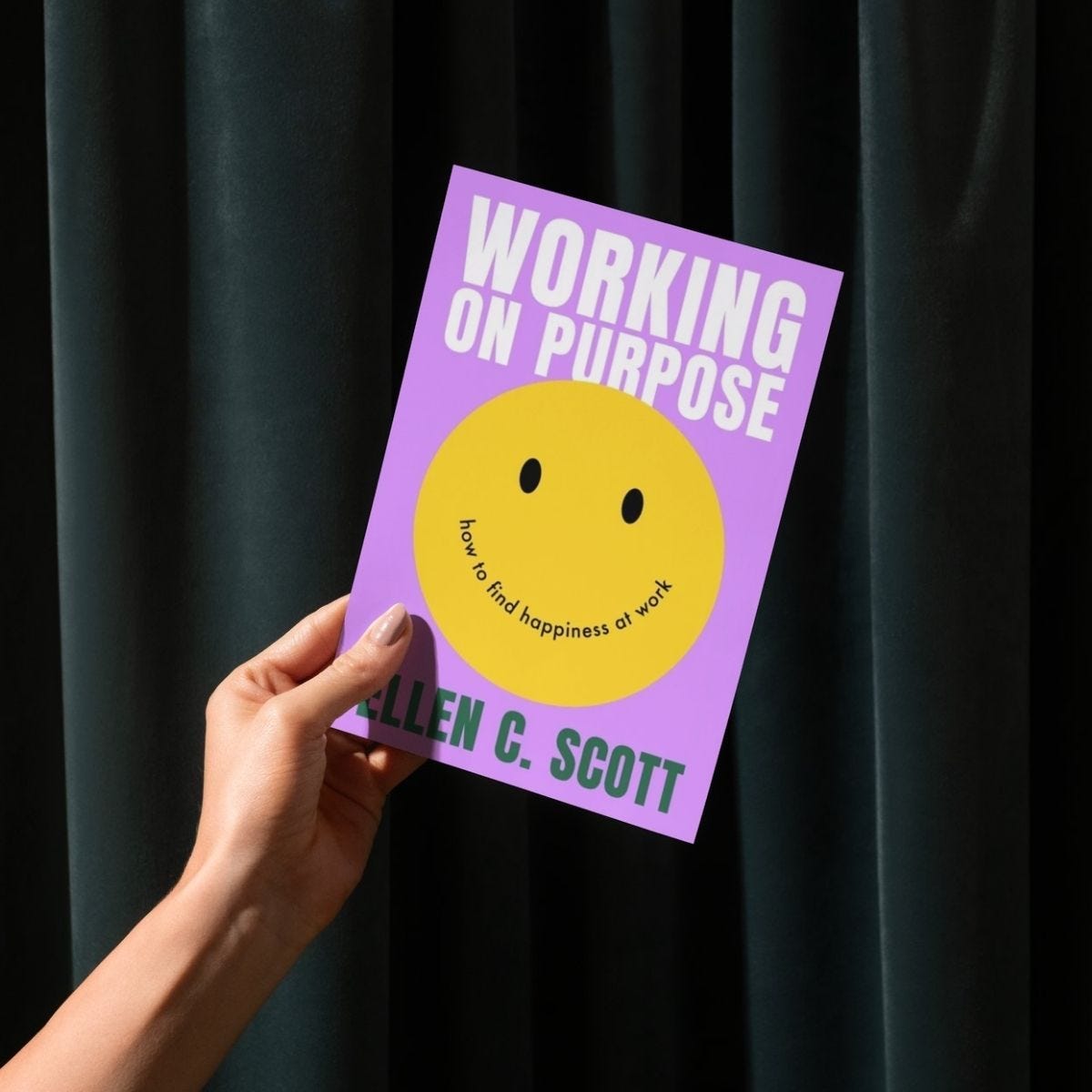
If you haven’t already, get yourself a copy of my debut book, Working On Purpose. It’s the ultimate guide to the modern world of work, with breakdowns of how to manage different generations, an explanation of how we ended up at the current state of work, expert advice on happier, healthier working, case studies of people in all sorts of careers, and loads more. You’ll find out whether you’re a searcher, striver, or stabiliser, and how to tweak your work to better fit your type and curate a career that brings you true contentment.
Because don’t we all love alliteration?
I could write a whole newsletter about SNL UK but it’s not really relevant to Working On Purpose. My overall opinion is: it’s fantastic! I did some audible laughs multiple times throughout both episodes. I like how they’ve engineered the Weekend Update duo to send bisexual women like me into a frenzy. The musical performances so far have been excellent. Emma Sidi is an icon. I would really like to be in the audience soon. If someone reading this has the power to get me into the audience (or, if we’re really dreaming big, the writers room), please make it happen.